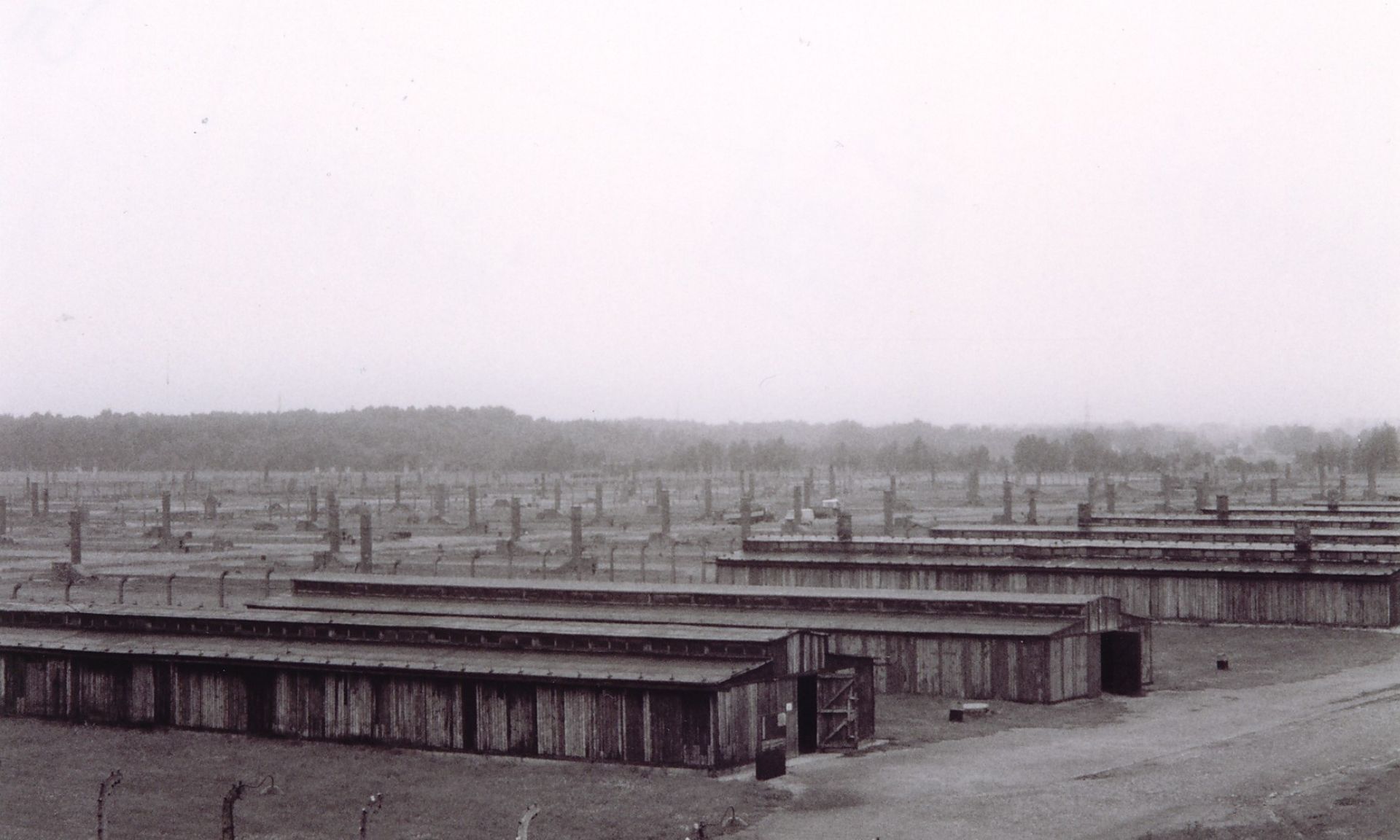
 Quarantine barracks at Auschwitz-Birkenau, Poland. Photograph taken by Auschwitz survivor Leon Jedwab, 1998. MHM Collection 838-97.
By Dr Daniel Haumschild & Alice McInnes
This year marks the 20th occasion of International Holocaust Remembrance Day (IHRD), which was established in late 2005 by the United Nations. When the resolution to create a global commemoration was conceived, 60 years had already passed since the liberation of Auschwitz. What that day meant to those who experienced it in 1945 was wildly different than what it meant when the resolution passed, and it has morphed and changed again in the two decades since. Yet the core ideas remain the same: remember those who fell victim to genocidal violence and educate future generations about the destructive capacity of humankind.
Like all great traditions, IHRD is tethered to these foundational tenets, yet must be experienced anew in its place and time each year. As eyewitnesses continue to pass on, as the political and social milieu rapidly shifts, and as antisemitism returns to fashion, this year’s commemoration provides us with a meaningful invitation to thoughtfully, critically, and creatively commit ourselves to honour the lives of Holocaust victims in the present through both words and deeds.
L’dor vador is an expression that emerges from Hebrew Bible. It is commonly translated as ‘from generation to generation’ and indicates the enduring task of remembrance and learning that constitutes a foundation of Jewish resilience. This year we reach into this reservoir of strength to refresh our commitment to memory and learning on behalf of hope and vitality.
For those who were imprisoned in Auschwitz, 27 January 1945 was not necessarily a day of celebration. Survivor Rachel Anklewicz vividly recalled the moment that Soviet troops arrived at the camp not as one of freedom, but as one of fear and confusion: