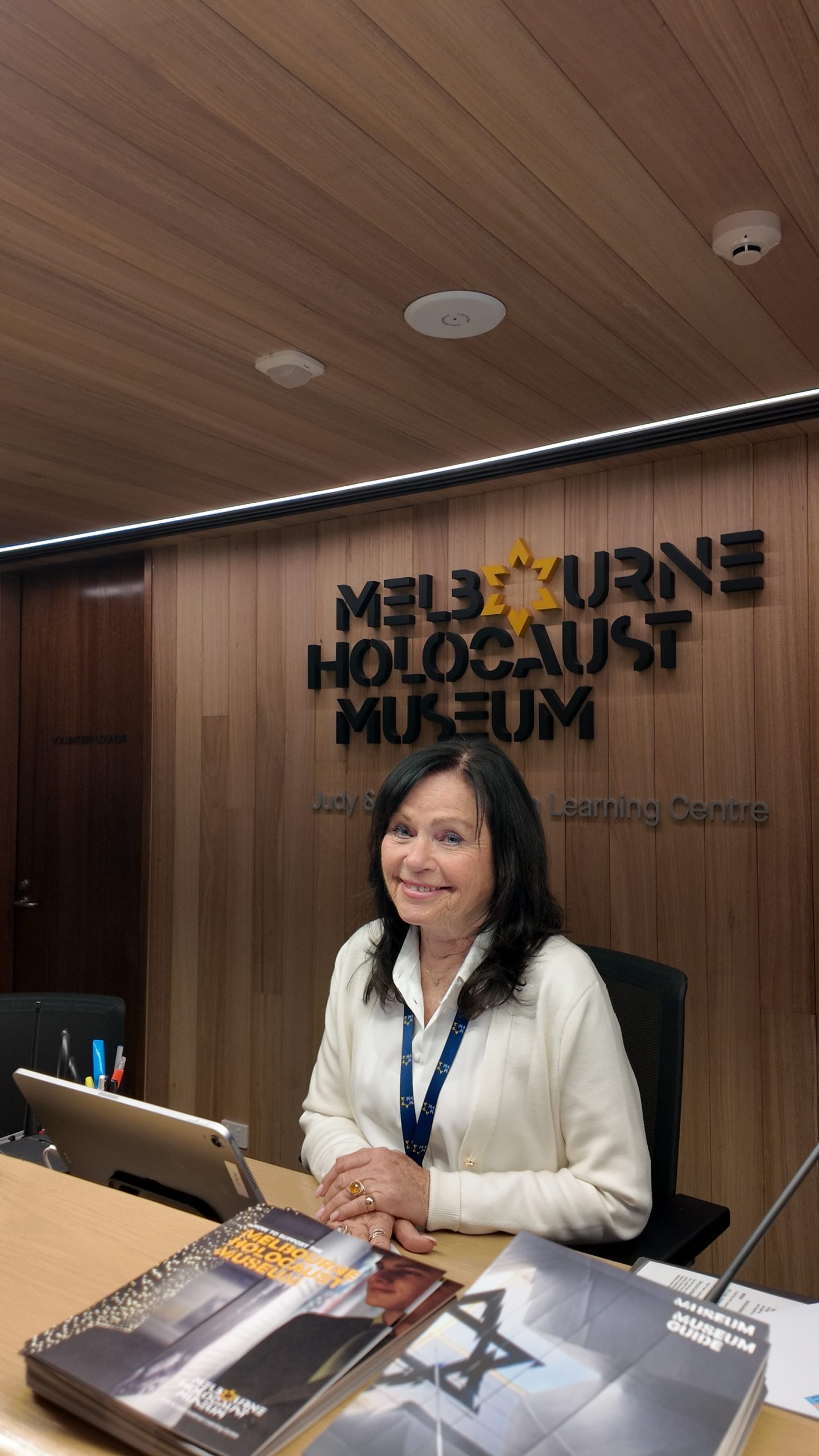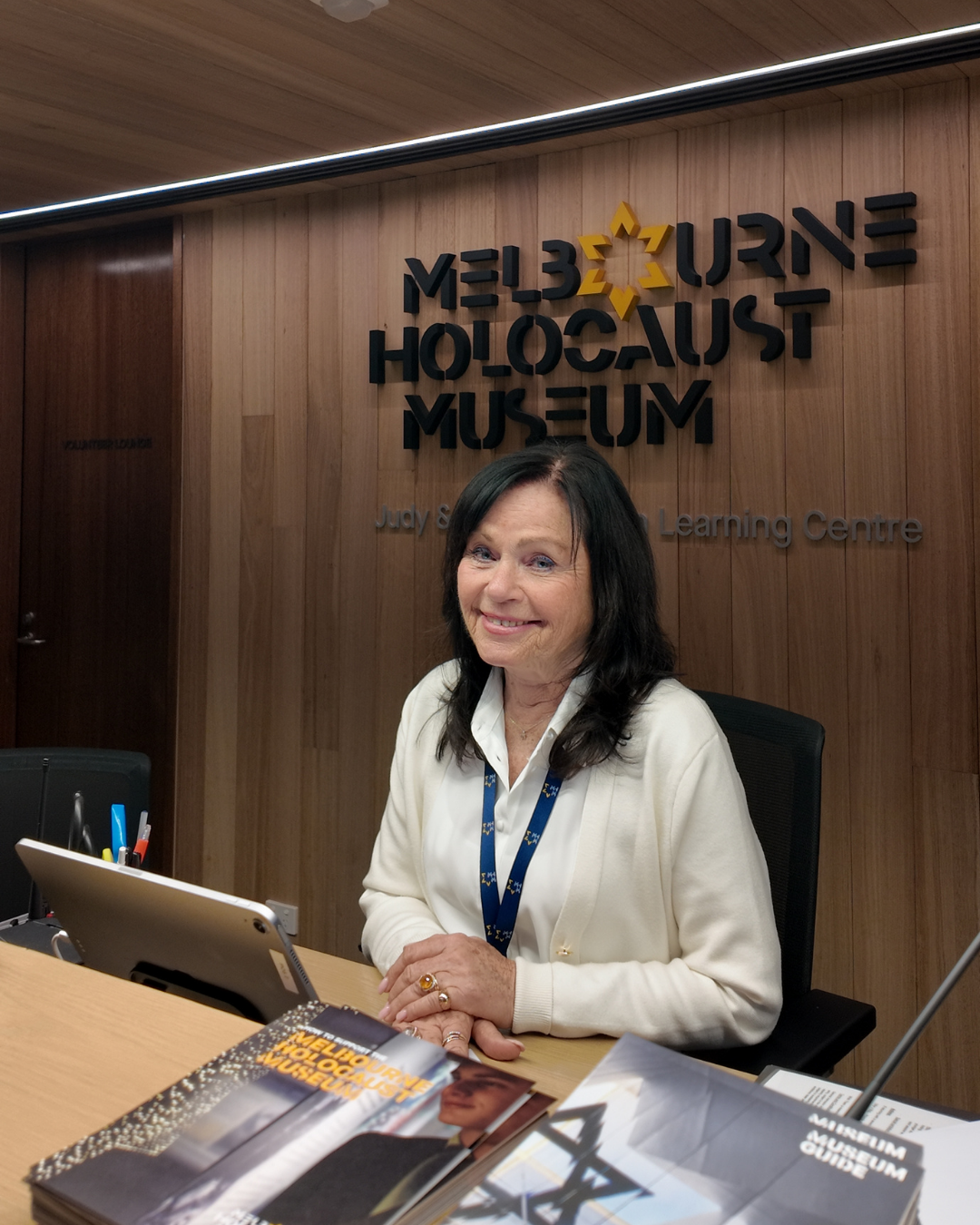
Every Tuesday, Rhonda Lipshutz walks into the Melbourne Holocaust Museum and feels at home. It is a feeling that might seem unexpected in a Holocaust museum, but for Rhonda, MHM is a place of warmth, connection and purpose. It is also a place where family history and the responsibility of remembrance come together.
Rhonda has volunteered at the museum for almost two years, following in the footsteps of her late mother, Rosa Krakowski, who spent more than 20 years volunteering as a guide and survivor speaker. Her mother had long encouraged her to become involved, and although Rhonda completed MHM’s Holocaust Education Course a decade ago, she knew at the time that volunteering was not for her. Instead, she waited.
Then, almost two years ago, she saw an advertisement for volunteers on Facebook. “I thought, this is the time,” Rhonda says. By then, her daughter Natalie had also become involved with MHM, serving on the museum’s Board. Joining the volunteer team felt like a way of connecting the two women who had shaped Rhonda’s relationship with the Museum. “I felt good volunteering like my mum did and helping like my daughter does,” she says. “It fits into those beautiful women in my life.”
Today, Rhonda volunteers in Visitor Experience, welcoming visitors and helping create the warm and inclusive environment she values so deeply. “Considering that it is a Holocaust museum, it is still very warm and embracing,” she says. “I feel appreciated. I feel like I am giving something back and doing something to help.”
Her Tuesdays are particularly significant. They were once her mother’s day volunteering at the museum.
Her work also places her at the centre of one of MHM’s most important responsibilities: connecting people with the stories of the Holocaust. For Rhonda, education is central to ensuring Holocaust history survives beyond the lifetime of those who experienced it. “If they learn something from here, they can take it into adulthood and into their lives and families,” she says.
That process of passing knowledge from one generation to the next is becoming increasingly urgent. As the number of Holocaust survivors’ declines, museums and communities face the challenge of ensuring that survivor testimony continues to be heard, understood and remembered. At MHM, that work is grounded in personal stories. For Rhonda, these stories are not abstract historical accounts. They are the stories of people she knew.
By welcoming visitors and helping create an environment where people can engage with difficult history, she contributes to the ongoing transmission of memory. She wants more people to know that MHM exists. “I just want it to continue and grow, and for it to be out there.”
The question is not whether the stories will survive, it is who will carry them forward. For now, Rhonda continues to return each Tuesday. She welcomes visitors and carries forward a family connection to the Museum. Her mother’s story is part of the history preserved at MHM. So are the stories of every survivor who has shared their experiences.